Cast Iron vs Triply Stainless Steel vs Non-Stick: Which Is Right for Your Kitchen?
Every kitchen ends up with a mix of pans, but if you are buying new, the question is the same: which one should I spend on? There is no single winner. Each material is good at some jobs and awkward at others. Here is a plain comparison so you can pick for the way you cook.
At a Glance
| Cast Iron | Triply Stainless Steel | Non-Stick | |
|---|---|---|---|
| Heat holding | Excellent, stays hot | Good, heats evenly | Light, heats and cools fast |
| Weight | Heavy | Medium | Light |
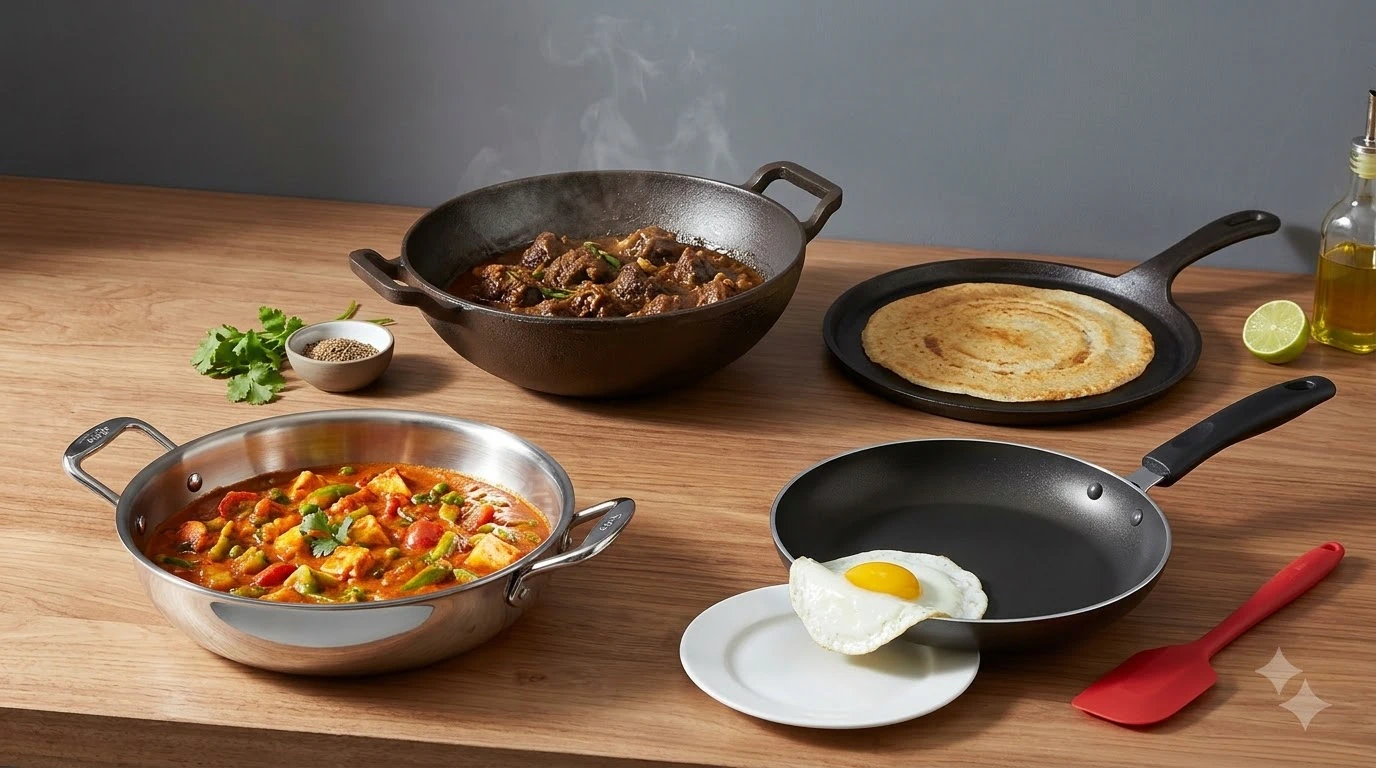
| Best at | Dosa, roti, searing, slow cooked curries | Everyday sabzi, dal, rice, boiling, sauteing | Eggs, delicate foods with little oil |
| Upkeep | Needs drying and a little oil | Easy, usually dishwasher friendly | Needs gentle utensils, coating wears with time |
| Induction | Works on most induction hobs, If base surface is flat | Works when the base has a magnetic layer | Depends on the base |
| Lifespan | Can last for generations if cared for | Many years | Coating usually wears out first |
Cast Iron
Cast iron is heavy, tough and holds heat for a long time. That makes it the natural choice for dosa, roti, parathas and anything you want browned well. It gets better with use as the seasoning builds up. The trade-off is a little care: dry it after washing, wipe a thin layer of oil and avoid long soaking. Read our seasoning guide if you are new to it.
Triply Stainless Steel
Triply cookware sandwiches a layer of aluminium between two layers of stainless steel, so the pan heats evenly and the food touches only steel. It is lighter than cast iron and easy to clean, and it takes tomato, lemon and tamarind dishes without any worry. The trade-off is that food can stick if you add it to a cold pan, so preheat and add oil. See how to clean and care for triply cookware.
Non-Stick
Non-stick pans are convenient for eggs and low oil cooking and are light to handle. The coating is the weak spot. It scratches, it should not be overheated and it eventually wears out, which means the pan has a limited life. If you want to know what India’s own nutrition guidelines say on cookware, read what the ICMR guidelines say about your cookware.
So Which Should You Buy?
- You make dosa, roti and parathas daily: start with a cast iron tawa.
- You want one pan for everyday gravies and rice: a triply kadai or pot is the easiest all rounder.
- You cook a lot of acidic curries: triply is the stress-free choice. Well seasoned cast iron can also manage shorter cooks, as explained here.
- You want to buy once and keep it: cast iron and triply are the longer lasting options.
Most people end up happiest with a small mix: an iron tawa and kadai for the heavy jobs, and a triply pot or fry pan for everything else. Browse our cast iron range and triply range. For more on materials, see Know Your Cookware.
Shop Cast Iron Range →
Keep reading
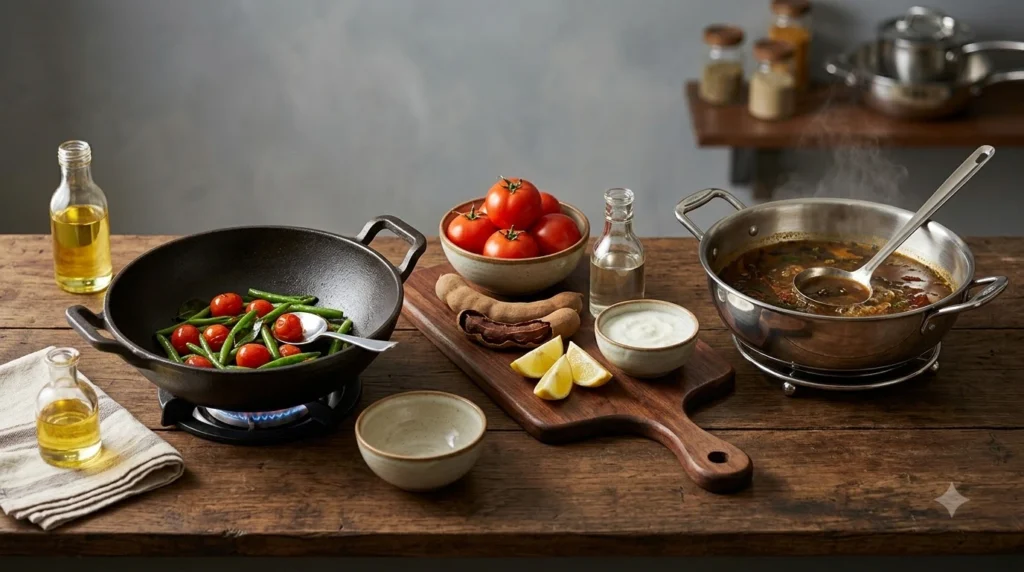
Can You Cook Tomato and Tamarind Dishes in a Cast Iron Kadai?
What happens when you cook tomato, tamarind or lemon in a cast iron kadai, when it is fine and when to pick another pan.
Read the story
Safe Cookware: What India’s Health Body ICMR Says
ICMR-NIN’s 2024 Dietary Guidelines for Indians have a short section on cookware and cooking methods. Here is what it says about non-stick pans, steel,...
Read the story