Safe Cookware: What India’s Health Body ICMR Says
ICMR (Indian Council of Medical Research) is the Government of India’s top body for health research. Its National Institute of Nutrition (NIN) in Hyderabad writes the official “Dietary Guidelines for Indians”, the food advice that doctors and dietitians across the country follow. The 2024 edition did not only talk about sugar, salt and what goes on the plate. Two quieter sections cover what we cook in, and how we cook.
We read them closely, because they sit right next to the question OREVIA started with. Here is what the guidelines say, in plain words, and what we think a family can take from it.
In This Guide
What ICMR says about the pan itself
The guidelines have a short section called “How to safely use cookware”. It goes material by material.
- Non-stick (Teflon-coated) pans. ICMR calls these a risk when they are heated beyond 170°C, which can happen if an empty pan is left on a burner for a long time. The coating can then give off fumes the guidelines describe as irritating or poisonous. The advice is to follow the usage and cleaning instructions strictly, and to discard the pan once the coating is worn or damaged.
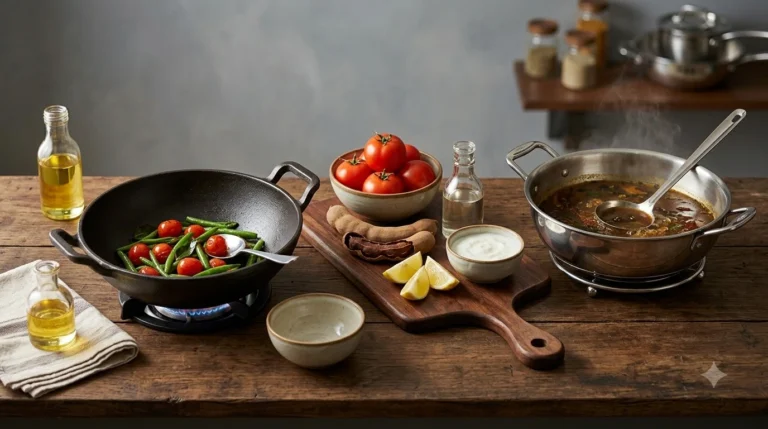
- Stainless steel. Considered generally safe when used properly. The guidelines note that it does not leach or react with acidic or alkaline foods, which is why it suits tomato, tamarind and lemon so well.
- Aluminium, iron, brass and copper. Small amounts of these metals can enter food when we cook or store food in them. The specific warning is about storage: pickles, chutneys, sambar and sauces should not be kept in aluminium, iron, or unlined brass or copper vessels.
- Earthen pots. ICMR calls these the safest option, and notes that they need very little oil. We make iron and steel, not clay, but that is an honest line and it deserves to be repeated.
The practical reading is simple. Cook in your iron pan, but do not store the achaar in it overnight. Keep an eye on any coated pan, never leave it empty on a flame, and replace it when the surface starts to go.
What ICMR says about how you cook
This is the part many of us have never been told. The guidelines open with a plain statement: cooking at high temperatures can destroy nutrients and can form harmful substances as well. A few specifics follow.
- Keep the lid on. Open-lid cooking takes longer, and the extra exposure to air speeds up nutrient loss. With the lid closed, food cooks faster and holds on to more of its nutrients, although green vegetables may change colour.
- Pulses are worth pressure cooking. Boiling or pressure cooking breaks down compounds that block digestion and reduces phytic acid, which gets in the way of absorbing iron, calcium, magnesium and zinc. ICMR also says to use just enough water and not to throw the cooking water away, since B vitamins and vitamin C can go with it. Overcooking pulses lowers protein quality, so there is a limit.
- Steaming is the gentlest method. Because the food meets steam rather than water, fewer water-soluble vitamins leach out.
- Stir-frying is quick, and time matters. A short cook with a little oil protects B vitamins. For vitamin C, the guidelines say that cooking time affects the loss more than the method does. The longer it cooks, the more is lost.
- Frying has a cost. Shallow frying loses more than you might expect because a thin layer of oil is exposed to a lot of air. Reusing frying oil is something ICMR specifically advises against, and used oil should not be mixed back with fresh oil.
- Slow, gentle cooking in liquid. The guidelines say that slow cooking breaks down cell walls and makes antioxidants from vegetables such as tomato and spinach more available to the body.
What we took from it
First, the 170°C warning is about coatings. A bare iron or steel pan has no coating to overheat, and that is the idea behind everything we make. But it would be wrong to read that as permission to run any pan at full blast. ICMR’s point about high temperatures applies to the food in every pan, whatever it is made of.
Second, the guidelines keep returning to the same two words: time and temperature. Less of either, where you can manage it, means more of the nutrition stays in the food. This is why we build with thick metal. A heavy pan stores heat and gives it back evenly, so you can cook on a lower, steadier flame without the base catching. We have laid out the numbers and the sources on our Know your cookware page, including a note that slow does not mean long. It means steady, moderate heat.
One more honest note. ICMR does not endorse any cookware brand, and we are not suggesting it does. We simply read what the guidelines say and built our range around what they and other published research point to.
A short kitchen checklist
- Never leave an empty pan on a lit burner.
- Replace any coated pan once the surface is scratched or worn.
- Cook in iron, steel or aluminium, but store acidic food like pickle and chutney in glass or ceramic.
- Use a lid when you can, and use just enough water.
- Keep the flame steady and moderate instead of high, and do not reuse frying oil.
Source: ICMR-National Institute of Nutrition, Dietary Guidelines for Indians, 2024. Guideline 13 on cooking methods (pages 80 to 85) and “How to safely use cookware?” (page 86). This post is general information and not medical or dietary advice.

Keep reading
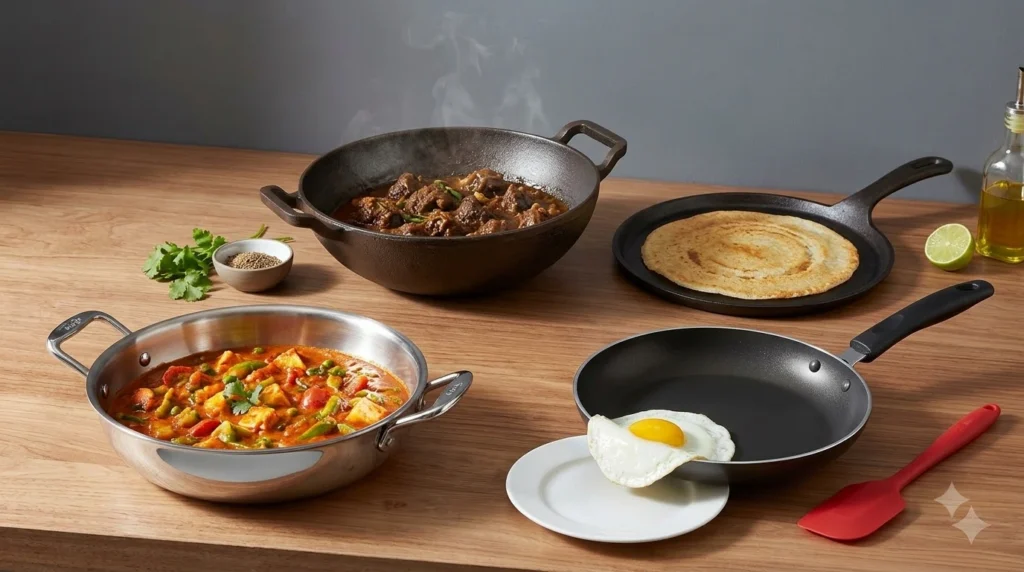
Cast Iron vs Triply Stainless Steel vs Non-Stick: Which Is Right for Your Kitchen?
An honest side by side comparison of cast iron, triply stainless steel and non-stick cookware for everyday Indian cooking.
Read the story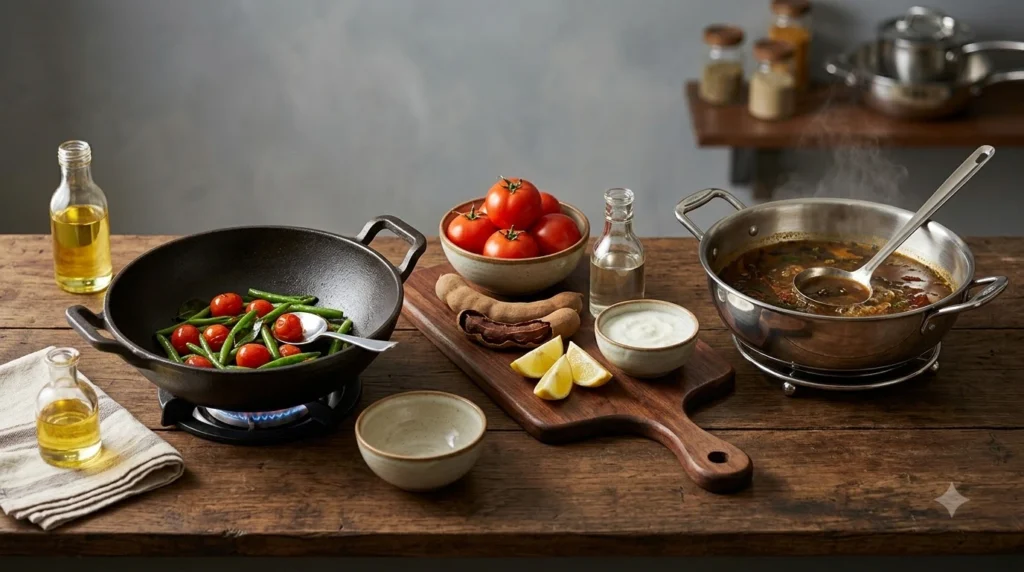
Can You Cook Tomato and Tamarind Dishes in a Cast Iron Kadai?
What happens when you cook tomato, tamarind or lemon in a cast iron kadai, when it is fine and when to pick another pan.
Read the story